What is a Digital Operating System? The Blueprint for Modern Business Growth
Discover what a Digital Operating System is and how unifying your website, CRM, and automation can scale revenue and maximize efficiency in modern business.

In today’s hyper-competitive markets—particularly in fast-paced business hubs like Dubai—relying on traditional, fragmented business processes is no longer a sustainable strategy. Many business owners find themselves trapped in a web of disconnected tools: a website that acts as a mere digital brochure, a standalone email inbox, a basic spreadsheet for lead tracking, and manual WhatsApp messages for customer follow-ups.
This fragmentation leads to lost leads, exhausted teams, and a severe bottleneck in scalability. The ultimate solution to this modern business dilemma is deploying a Digital Operating System (DOS).
What Exactly is a Digital Operating System?
A Digital Operating System is not a single piece of software like Windows or macOS. Instead, it is a highly structured digital infrastructure that intelligently connects your website, Customer Relationship Management (CRM) system, automation software, analytics, AI tools, and communication channels into one unified, seamless workflow.
Think of it as the central nervous system of your enterprise. Rather than juggling five different tools that refuse to speak to one another, a DOS ensures that data flows effortlessly from the exact moment a prospect discovers your brand to the moment they become a loyal customer—and beyond.
The Core Components of a Modern DOS
To build a truly scalable and resilient infrastructure, your Digital Operating System must integrate several foundational pillars seamlessly:

1. The Hub: A Conversion-Optimized Website
Your website must be more than a passive digital business card; it needs to operate as your best, 24/7 salesperson. In a fully optimized DOS, the website is the primary lead capture mechanism, engineered with strategic marketing funnels to convert high-intent traffic into actionable data.
2. The Brain: A Centralized CRM
When a lead is captured on your website, where does it go? In a traditional setup, it might languish in an unmonitored email inbox. In a DOS, it is instantly routed into a robust, cloud-based CRM. This system organizes customer data, tracks complete interaction history, and provides your sales team with total visibility over the revenue pipeline.
3. The Muscles: Automation & AI
Manual follow-ups are inherently slow and prone to human error. Automation acts as the muscle of your DOS, executing repetitive administrative tasks flawlessly. The moment a lead enters the CRM, the DOS automatically triggers personalized email sequences, assigns strategic tasks to sales representatives, and leverages AI to qualify leads—all entirely without manual intervention.
4. The Compass: Data Analytics
You cannot scale what you cannot measure. A DOS continuously aggregates complex data from all customer touchpoints into clean, unified dashboards. This provides leadership with real-time, actionable insights into customer acquisition costs (CAC), conversion rates, and overall campaign ROI.
Why Traditional Businesses Need a DOS to Survive
For traditional businesses—especially those in rapidly evolving markets like Dubai transitioning from word-of-mouth operations to the global digital stage—adopting a DOS is the ultimate competitive advantage. Here is why modernizing your infrastructure matters:
- Eliminates Data Silos: No more copying and pasting information between platforms. Your marketing, sales, and fulfillment systems sync perfectly in real-time.
- Scales Lead Capture: Whether you generate 10 or 10,000 inquiries, a DOS processes, tags, and nurtures every single lead with the exact same level of precision.
- Empowers Data-Driven Decisions: Business owners no longer have to guess which marketing efforts are generating revenue. The centralized analytics dashboard provides absolute clarity.
- Enhances the Customer Journey: Prospects receive immediate, professional, and highly personalized communication, instantly elevating your brand's perceived market value.
The ROI of Digital Infrastructure
Implementing a Digital Operating System is a direct investment in your company's future equity. By automating tedious administrative tasks, your team can focus exclusively on high-value, revenue-generating activities: closing deals, building relationships, and innovating.
The future of business growth belongs to those who view technology not as an operational expense, but as a foundational infrastructure. If your business is still running on disconnected tools, you are leaving substantial revenue on the table. It is time to architect a system that works tirelessly for you.
Frequently Asked Questions
How does this impact domain authority?
By structuring content precisely according to Search Engine parameters (like this exact FAQ schema), the indexing algorithms prioritize the insights feed, leading to a permanent lift in domain ranking.
Ready to Install Your
Digital Operating System?
Stop losing leads to manual workflows. Let our engineers build a high-performance conversion engine that scales automatically. Zero technical debt.
Related Insights
Explore deeper protocol nodes
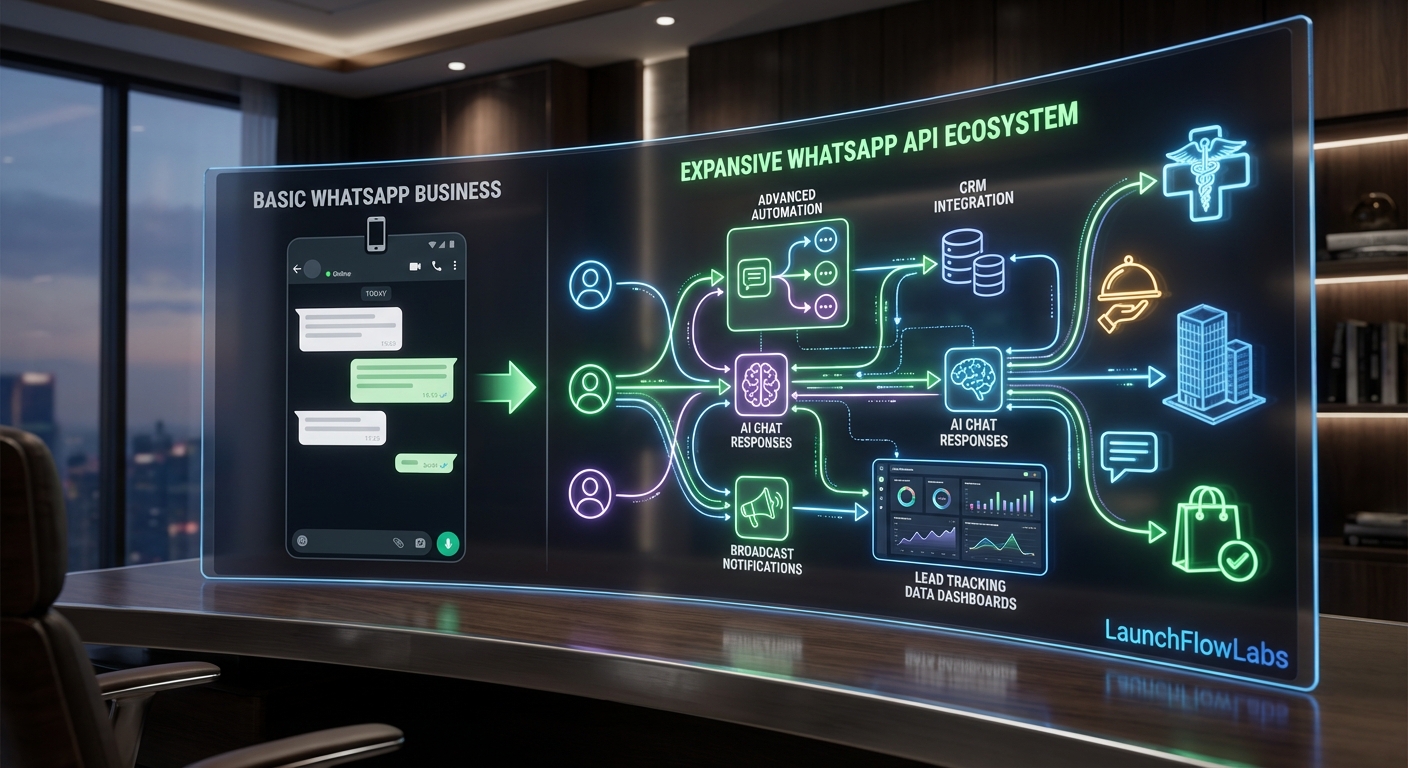
WhatsApp API vs. WhatsApp Business: The Executive Guide to Scaling Communications
Compare WhatsApp API vs WhatsApp Business. Discover how enterprise automation, CRM integration, and AI scale communications for growing UAE businesses.

Turning Visitors into Paying Customers: The Elite Conversion Playbook
Transform website traffic into predictable revenue. Learn how a structured visitor to customer funnel and automation can scale your business effortlessly.

Why Speed Wins in Dubai: The Competitive Advantage of Instant Operations
Discover why operational speed is the ultimate competitive advantage in Dubai. Learn how business automation and high-speed digital systems drive revenue.